Working at a computer for extended periods can wreak havoc on your body. While most people focus on back pain or eye strain, jaw tension is an often overlooked consequence of poor posture. Hours spent hunched over a keyboard can cause you to unconsciously clench your jaw, leading to discomfort, headaches, and even temporomandibular joint disorder.
Understanding how computer work affects your jaw is the first step toward relief. Additionally, learning simple relaxation techniques can help you maintain comfort throughout your workday. This article explores practical strategies to release jaw tension and prevent future strain.
Understanding the Connection Between Posture and Jaw Tension
Poor computer posture creates a chain reaction throughout your body. When you lean forward to view your screen, your head moves ahead of your shoulders. This position forces your neck muscles to work harder to support your head’s weight.
The strain doesn’t stop at your neck. Your jaw muscles compensate for the misalignment, often leading to unconscious clenching. Furthermore, stress from work deadlines can intensify this tension. Many people don’t realize they’re grinding their teeth until pain develops.
According to the Mayo Clinic, temporomandibular joint disorders affect the jaw joint and surrounding muscles. Poor posture is a contributing factor that many office workers face daily. Recognizing these connections helps you address the root cause rather than just treating symptoms.
Immediate Relief Techniques for Jaw Tension
When you notice jaw tightness during work, several quick techniques can provide relief. These methods take only minutes and can be performed at your desk.
Start with gentle jaw stretches. Open your mouth slowly until you feel a comfortable stretch. Hold this position for five seconds, then close slowly. Repeat this movement five times to release built-up tension.
Next, try a simple massage technique. Place your fingers on your jaw muscles just below your cheekbones. Apply gentle circular pressure for 30 seconds on each side. This motion increases blood flow and helps relax tight muscles.
Another effective method involves the tongue position trick. Rest your tongue on the roof of your mouth, just behind your front teeth. This natural position prevents clenching and encourages relaxation. Moreover, it’s a technique you can maintain throughout the day without interrupting your work.
Progressive Muscle Relaxation for the Jaw
Progressive muscle relaxation is a powerful tool for releasing tension. This technique involves deliberately tensing and then relaxing specific muscle groups. However, it requires a quiet moment away from your computer.
Begin by finding a comfortable seated position. Take three deep breaths to center yourself. Then, gently clench your jaw for five seconds, being careful not to strain. Release the tension suddenly and notice the difference in sensation.
Repeat this process three times. The contrast between tension and relaxation helps your brain recognize when you’re unconsciously clenching. Consequently, you’ll become more aware of jaw tension throughout your workday.
Additionally, combine this technique with neck rolls. Tilt your head slowly to each side, holding for ten seconds. This movement addresses the postural issues that contribute to jaw strain.
Creating an Ergonomic Workspace
Prevention is always better than treatment. Therefore, adjusting your workspace can significantly reduce jaw tension before it starts.
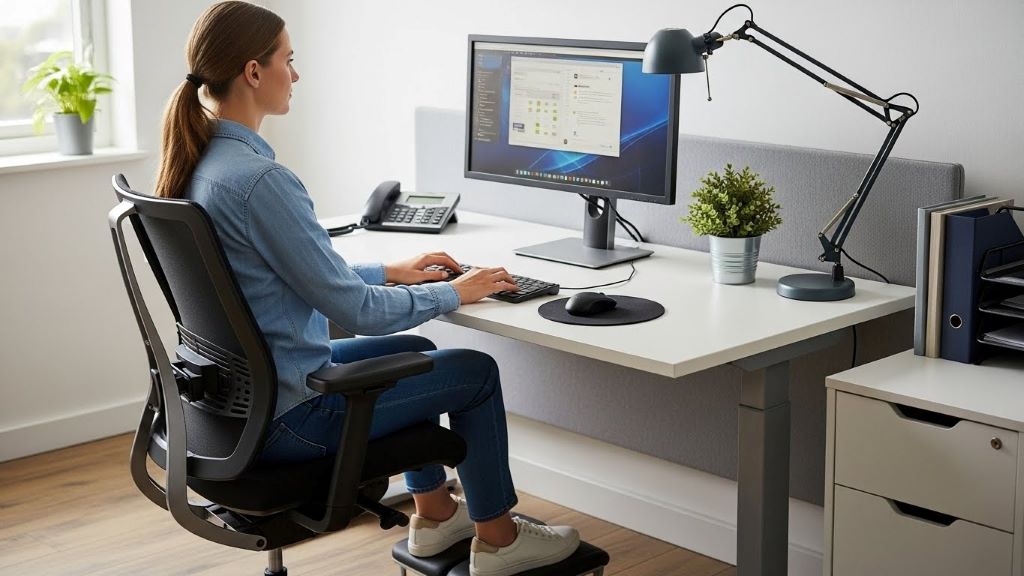
Position your monitor at eye level, approximately an arm’s length away. This setup prevents you from leaning forward or tilting your head unnaturally. Your eyes should naturally fall on the top third of your screen.
Ensure your chair supports proper posture. Your feet should rest flat on the floor with your knees at a 90-degree angle. Your back should touch the chair’s backrest, supporting your spine’s natural curve.
Consider using a document holder if you frequently reference papers while typing. Constantly looking down at documents creates the same forward head posture that strains your jaw. Furthermore, adequate lighting reduces eye strain, which can indirectly decrease facial tension.
Incorporating Regular Movement Breaks
Sitting for hours without movement compounds postural problems. Regular breaks are essential for maintaining jaw comfort and overall health.
Set a timer to remind yourself to move every 30 minutes. Stand up, walk around your workspace, and perform gentle stretches. These brief interruptions reset your posture and reduce accumulated tension.
During breaks, perform specific jaw exercises. Open and close your mouth slowly ten times. Then, move your jaw from side to side five times in each direction. These movements keep your jaw joint mobile and prevent stiffness.
The Cleveland Clinic recommends regular movement as part of TMJ disorder prevention. Even a five-minute break each hour can make a substantial difference in your comfort level.
Stress Management and Mindfulness Practices
Stress is a major contributor to jaw clenching. Learning to manage workplace stress can dramatically reduce jaw tension.
Practice mindfulness during your workday. Take a moment every hour to scan your body for tension. Notice whether your jaw is clenched, your shoulders are raised, or your breathing is shallow. This awareness allows you to make immediate adjustments.
Deep breathing exercises are particularly effective. Inhale slowly through your nose for four counts. Hold for four counts, then exhale through your mouth for six counts. This pattern activates your parasympathetic nervous system, promoting relaxation throughout your body.
Consider keeping a stress ball or hand exerciser at your desk. Squeezing these objects can redirect nervous energy that might otherwise manifest as jaw clenching. Moreover, they provide a healthy outlet for workplace frustration.
Evening Routine for Jaw Recovery
What you do after work is just as important as daytime habits. Establishing an evening routine helps your jaw recover from daily strain.
Apply warm compresses to your jaw for 15 minutes each evening. The heat increases circulation and relaxes tight muscles. You can use a warm washcloth or a heating pad on a low setting.
Avoid hard or chewy foods in the evening. Give your jaw a rest by choosing soft foods that require minimal chewing. This practice is especially important if you’ve experienced significant tension during the day.
Practice gentle yoga or stretching before bed. Poses that open the chest and lengthen the neck counteract the forward posture of computer work. Additionally, these movements promote better sleep, allowing your body to heal overnight.
When to Seek Professional Help
While self-care techniques are effective for many people, sometimes professional intervention is necessary. Recognizing when to seek help prevents minor issues from becoming chronic problems.
Persistent pain that doesn’t improve with home treatment warrants a visit to your healthcare provider. If you experience clicking sounds when opening your mouth, difficulty chewing, or jaw locking, these are signs of a more serious condition.
A dentist can evaluate you for teeth grinding and may recommend a night guard. Physical therapists specialize in treating musculoskeletal issues, including jaw tension. They can provide targeted exercises and manual therapy.
Furthermore, occupational therapists can assess your workspace and suggest specific ergonomic improvements. Don’t hesitate to seek professional guidance if jaw tension impacts your quality of life.
Conclusion
Jaw tension from computer work is a common but manageable problem. By understanding the connection between posture and jaw strain, you can take proactive steps toward relief. Immediate techniques like stretching and massage provide quick comfort, while ergonomic adjustments prevent future issues.
Regular movement breaks and stress management practices address the underlying causes of tension. An evening recovery routine supports healing, and knowing when to seek professional help ensures you don’t suffer unnecessarily. Therefore, implementing these strategies will help you maintain a comfortable, pain-free jaw throughout your workday and beyond.
Remember that consistency is key. Small, regular actions produce better results than occasional intensive efforts. Your jaw health is an important part of your overall wellbeing, and it deserves attention alongside other workplace health concerns.
Frequently Asked Questions
How often should I take breaks to prevent jaw tension?
Take a short break every 30 minutes to stand, stretch, and reset your posture. Additionally, perform quick jaw exercises every hour. These frequent interruptions prevent tension from building up throughout the day.
Can poor posture really cause jaw problems?
Yes, forward head posture forces your jaw muscles to compensate for misalignment. This creates unconscious clenching and strain. Correcting your posture addresses the root cause of many jaw issues related to computer work.
What’s the fastest way to relieve jaw pain at my desk?
Gentle massage combined with jaw stretches provides immediate relief. Place your fingers on your jaw muscles and apply circular pressure for 30 seconds. Then slowly open and close your mouth five times to release tension.
Should I see a doctor for jaw tension from computer work?
If home treatments don’t improve your symptoms within two weeks, consult a healthcare provider. Additionally, seek help immediately if you experience jaw locking, severe pain, or difficulty eating.
Does stress really make jaw clenching worse?
Absolutely. Stress triggers the body’s fight-or-flight response, which often manifests as muscle tension. Workplace stress commonly leads to unconscious jaw clenching. Therefore, managing stress through breathing exercises and mindfulness is essential for jaw health.
Related Topics:
How to Stay Fit Without a Gym: Your Ultimate Home Workout Guide
PNF Stretching Integration in Yoga: Unlock Your Body’s Full Potential with This Game-Changing Technique”