

To build a home workout routine, pick a clear goal, choose three to five days per week, and combine strength, cardio, and mobility work. Then start with short sessions and add more over time. You do not need a gym or fancy gear to get results.
Most people quit because their plan is too big, too vague, or too hard to fit into daily life. So this guide focuses on small, repeatable steps. You will learn how to set a goal, pick exercises, plan your week, and track progress.
The advice works for beginners, busy parents, students, and remote workers alike. Adjust each step to fit your space, your schedule, and your fitness level.
Why Should You Start With a Clear Goal?
A clear goal tells you what to train, how often to train, and how to measure success. Without one, workouts turn random, and random workouts rarely lead to progress.
Choose One Main Goal
Pick one main goal for the next eight to twelve weeks. Common goals include building strength, losing body fat, improving stamina, or feeling less stiff. Of course, you can gain several benefits at once. However, one main focus helps you make better choices.
Make the Goal Specific
“Get fit” is too vague to guide you. Instead, write a goal you can measure. For example, “Do ten full push-ups by the end of week eight.” Likewise, “Walk briskly for 30 minutes without stopping” works well for stamina.
Check Your Starting Point
Test yourself before you begin. Count how many bodyweight squats you can do in one minute. Then time how long you can hold a plank. Write the numbers down. You will use them later to see your progress.
How Many Days a Week Should You Work Out at Home?
Most beginners do well with three days per week. More experienced people can train four or five days. Rest days matter just as much, because your muscles grow stronger while you recover.
Health agencies such as the World Health Organization suggest adults aim for at least 150 minutes of moderate activity each week. Strength work on two or more days is also recommended. Three 40-minute sessions cover most of that target.
Here are some simple ways to choose your schedule:
- Three days: Best for beginners and busy people. Train Monday, Wednesday, and Friday.
- Four days: Good for steady progress. Split your sessions into upper body and lower body.
- Five days: Suits experienced exercisers. Keep at least one light day for walking or stretching.
Choose the schedule you can keep even during your busiest week. A plan you follow beats a perfect plan you skip.
What Should a Balanced Home Workout Include?
A balanced routine includes strength training, cardio, and mobility work. Each part does a different job. Together, they keep your body strong, fit, and pain free.
Strength Exercises
Strength work builds muscle and protects your joints. You can train every major muscle group with bodyweight moves. Try these basics:
- Push: Push-ups, incline push-ups, or pike push-ups
- Pull: Backpack rows, towel rows, or resistance band rows
- Legs: Squats, lunges, step-ups, and glute bridges
- Core: Planks, dead bugs, and bird dogs
Do two to four sets of eight to fifteen reps for each move. Stop each set when you have about two reps left in the tank.
Cardio Options
Cardio strengthens your heart and lungs. It also improves your energy during the day. You do not need to run. Brisk walking, dancing, jumping rope, and shadow boxing all count. Low-impact options, such as marching in place, help if you live in an apartment or have sore knees.
Mobility and Warm-Up Work
Mobility work keeps your joints moving well. Spend five minutes before each session on gentle moves like arm circles, hip circles, and cat-cow stretches. Then finish with a short stretch. This habit lowers your risk of stiffness and helps you train more often.
Structuring Your Weekly Home Workout Schedule
Building a sustainable home routine starts with giving each training day a singular, well-defined focus. Rather than overcomplicating your calendar, begin by locking in the specific days you can realistically commit to, then thoughtfully alternate between dedicated strength sessions, dynamic cardiovascular conditioning, and strategic recovery days. Prioritize establishing a smooth, repeatable rhythm over sheer intensity in the early stages; once consistent movement becomes second nature, you can seamlessly elevate your results by exploring what fitness tips burn fat fast.
A Simple Three-Day Sample Plan
- Day 1 (Full-body strength): Squats, push-ups, rows, glute bridges, and planks
- Day 2 (Cardio and core): 20 minutes of brisk walking or jump rope, plus core moves
- Day 3 (Full-body strength): Lunges, pike push-ups, band pulls, step-ups, and dead bugs
Rest or walk lightly on the other days. Each session should take 30 to 45 minutes, including your warm-up.
How to Structure Each Session
Follow the same order every time. First, warm up for five minutes. Next, do your main strength moves. After that, add cardio or core work. Finally, stretch for three to five minutes. This order keeps your sessions simple, so you spend less time deciding and more time training.
A Useful Trick: Attach Workouts to Existing Habits
Most articles tell you to schedule workouts by the clock. That works for some people, but it fails when your day changes. Instead, link your workout to something you already do daily. For example, train right after you make your morning coffee. Or change into workout clothes as soon as you finish work. The habit you already have acts as a trigger, so you rely less on willpower.
What Equipment Do You Really Need at Home?
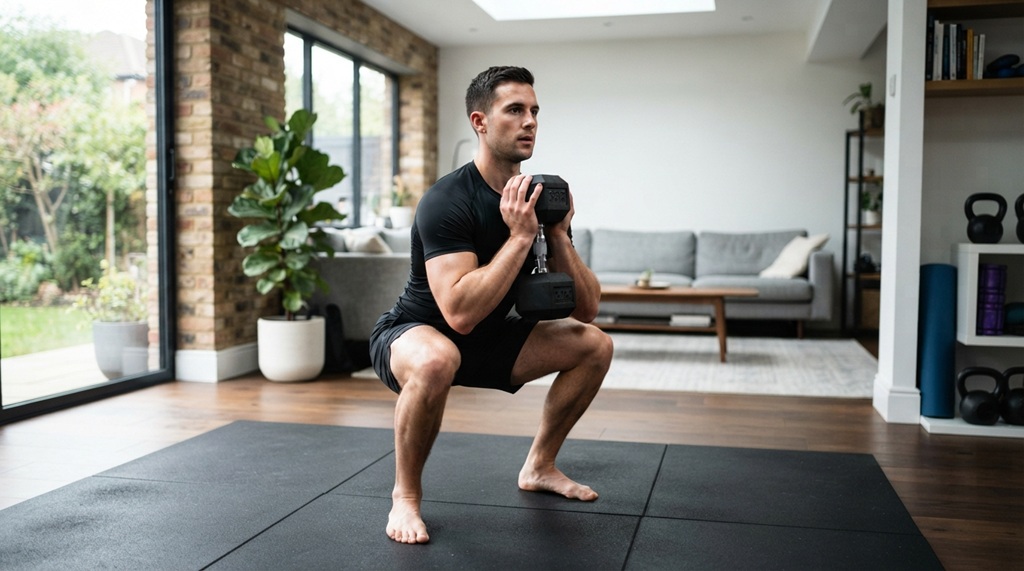
You need no equipment to start, but a few low-cost items can expand your options. Bodyweight exercises give you enough challenge for the first two to three months.
Free Items You Already Own
Look around your home first. A sturdy chair works for step-ups and dips. A backpack filled with books adds weight to squats and rows. A towel on a smooth floor turns into a sliding tool for core work. Even a water jug makes a decent weight.
Low-Cost Upgrades
If you want to buy something, choose these in order:
- Resistance bands: They are cheap, light, and good for pulling moves.
- A yoga mat: It adds comfort and grip.
- Adjustable dumbbells: They cost more, but they let you add weight as you grow stronger.
Skip expensive machines at first. You can always upgrade later once the habit sticks.
How Do You Stay Consistent and Track Progress?
You stay consistent by making workouts easy to start and simple to track. Small wins keep you motivated, and motivation follows action more often than it leads it.
Start Smaller Than You Think
On busy days, commit to just ten minutes. Once you begin, you will often keep going. Even if you stop, you still protect the habit. That matters more than one perfect session.
Track Three Simple Numbers
Write down your workout date, your exercises, and your reps. That is enough. Every two weeks, compare your numbers to your starting point. Seeing more reps or longer holds proves you are improving, even when the mirror shows little change.
Use the Progressive Overload Rule
Progress means doing slightly more over time. Add one rep per set, one more set, or a slower lowering phase. Alternatively, choose a harder version of the move. For instance, move from wall push-ups to incline push-ups, then to floor push-ups. Change only one thing at a time.
Listen to Your Body
Mild muscle soreness is normal. Sharp pain is not. If you feel pain, stop the exercise and rest. If it continues, talk with a doctor or a qualified trainer. This is especially important if you have a health condition or an injury.
Frequently Asked Questions
How long should a home workout routine be?
Most home workouts should last 30 to 45 minutes. Beginners can start with 15 to 20 minutes and build up slowly. Shorter sessions still work when you do them regularly.
Can I build muscle with bodyweight exercises only?
Yes, you can build muscle with bodyweight exercises, especially as a beginner. To keep progressing, make each move harder over time. Slow reps, harder variations, and extra sets all help.
What is the best time of day to work out at home?
The best time is the time you can keep doing. Some people feel strong in the morning, while others prefer the evening. Choose a slot that fits your schedule and stay with it for a few weeks.
How do I stay motivated when I work out alone?
Set small goals and track your reps. You can also invite a friend to check in with you each week. Furthermore, keep your workout space ready so you can start without delay.
Should I work out every day?
You do not need to work out every day. Most people improve faster with three to five training days and enough rest. Light walking or stretching on rest days is fine.
Conclusion
A good home workout routine starts with a clear goal, a realistic schedule, and a balance of strength, cardio, and mobility. Keep your sessions short, track a few simple numbers, and add small challenges over time.
Start this week. Pick your days, choose five exercises, and complete your first session. Consistency will do the rest.


