
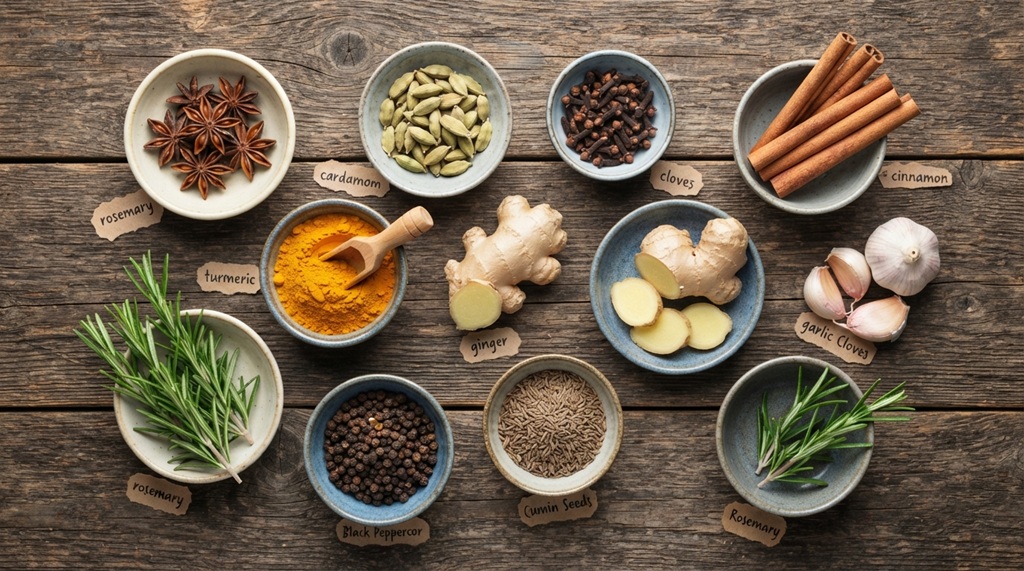
You don’t need exotic supplements to support your health. You already have powerful tools sitting in your kitchen cabinet.
This guide breaks down 10 everyday herbs and spices, explains what makes each one beneficial, and shows you simple ways to use them daily.
What Makes Kitchen Herbs and Spices Medicinal?
Herbs and spices contain natural plant compounds called phytochemicals. These compounds give plants their color, smell, and flavor, and many of them also protect the human body.
Some phytochemicals act as antioxidants. They neutralize harmful molecules called free radicals before those molecules damage your cells. Other compounds fight inflammation, kill bacteria, or support digestion.
According to industry experts and nutrition researchers, regular use of these plants in cooking can contribute to long-term health. The key word is regular. A single dose won’t transform your health, but consistent use adds up over time.
Turmeric and Ginger: Anti-Inflammatory Powerhouses
These two roots grow from the same plant family, and both fight inflammation naturally.
Turmeric
Turmeric gets its bright yellow color from curcumin, its main active compound. Curcumin reduces inflammation markers in the body and acts as a strong antioxidant.
Studies suggest curcumin may ease joint pain in people with arthritis. It may also support brain health by reducing oxidative stress.
Your body absorbs curcumin poorly on its own. Pair turmeric with black pepper to boost absorption significantly. A pinch of black pepper in your turmeric latte or curry makes a real difference.
Ginger
Ginger has calmed upset stomachs for centuries, and modern science backs this use. Compounds called gingerols reduce nausea and may ease morning sickness during pregnancy.
Ginger also fights inflammation and may reduce muscle soreness after exercise. Many people brew it as tea or add fresh slices to stir-fries.
Try steeping fresh ginger in hot water for 10 minutes to make a simple digestive tea.
Garlic and Cinnamon: Heart and Blood Sugar Support
These two ingredients target two of the most common health concerns: heart disease and blood sugar imbalance.
Garlic
Garlic contains allicin, a sulfur compound released when you crush or chop a clove. Allicin gives garlic its strong smell and most of its health benefits.
Research links garlic to lower blood pressure and improved cholesterol levels. Some studies also show it supports immune function, which may explain why garlic has long been used to fight colds.
Crush your garlic and let it sit for 10 minutes before cooking. This step allows allicin to fully form before heat breaks it down.
Cinnamon
Cinnamon does more than flavor your morning oatmeal. Studies show it may help lower blood sugar levels in people with type 2 diabetes.
Ceylon cinnamon works best for regular consumption, since cassia cinnamon (the common grocery store type) contains higher levels of a compound called coumarin, which can harm the liver in large amounts.
Sprinkle cinnamon on coffee, yogurt, or oatmeal for an easy daily habit.
Cayenne Pepper and Black Pepper: Metabolism and Absorption Boosters
These peppers do more than add heat. They support digestion and help your body use nutrients more efficiently.
Cayenne Pepper
Cayenne pepper contains capsaicin, the compound responsible for its spicy kick. Capsaicin may boost metabolism slightly and support healthy circulation.
Some research links capsaicin to reduced appetite, which may support weight management as part of a balanced diet. It may also ease pain when applied topically in creams.
Start with a small pinch in soups or sauces if you’re new to spicy food.
Black Pepper
Black pepper contains piperine, a compound that increases how well your body absorbs certain nutrients, including curcumin from turmeric and various vitamins.
Beyond absorption, piperine shows antioxidant and anti-inflammatory properties in early research. It’s a small addition with an outsized effect.
Add fresh-ground black pepper to nearly any savory dish for both flavor and function.
Oregano and Rosemary: Potent Antioxidants for Cellular Defense and Flavor
Belonging to the Lamiaceae (mint) family, oregano and rosemary stand out as formidable medicinal staples, brimming with powerful polyphenols that deliver robust antioxidant and antimicrobial protection. Beyond shielding cellular health and enhancing savory culinary profiles, optimizing daily wellness also involves making intentional choices about sugar consumption especially when preparing sweet dishes alongside savory ones. If you are looking to replace refined sugars in your daily meals without compromising on taste, explore our guide on baking with monk fruit vs stevia extract: Which sweetener works best in your recipes? to discover how these natural options perform in kitchen applications.
Oregano
Oregano contains carvacrol and thymol, two compounds with natural antimicrobial properties. Lab studies show these compounds fight certain bacteria and fungi.
Oregano also ranks among the highest herbs for antioxidant content, gram for gram. Dried oregano actually contains more concentrated antioxidants than the fresh form.
Use it generously in tomato sauces, roasted vegetables, or homemade salad dressings.
Rosemary
Rosemary contains rosmarinic acid, a compound linked to reduced inflammation and improved memory function in some studies.
Traditional use includes rosemary for digestion and mental clarity. Modern research continues to explore its effects on brain health, particularly in aging populations.
Fresh rosemary sprigs work well roasted with potatoes, chicken, or root vegetables.
Peppermint and Cloves: Digestive and Pain Relief

These two ingredients target discomfort, whether in your stomach or elsewhere in your body.
Peppermint
Peppermint relaxes the muscles of the digestive tract, which may ease symptoms of irritable bowel syndrome (IBS). Peppermint oil capsules are commonly studied for this purpose.
Peppermint tea also helps some people manage bloating and mild indigestion after meals.
Brew fresh or dried peppermint leaves in hot water after a heavy meal.
Cloves
Cloves contain eugenol, a compound with natural pain-relieving and antimicrobial properties. Eugenol is why clove oil has long been used for tooth pain.
Cloves also rank high in antioxidants and may support blood sugar regulation when used regularly in cooking.
Add whole cloves to slow-cooked dishes, or grind them fresh into spice blends.
How to Add These Herbs and Spices to Your Daily Diet
The biggest barrier to benefiting from these herbs and spices isn’t availability it’s consistency. Small daily habits work better than occasional large doses.
Start by adding one new spice to a meal you already cook regularly. Sprinkle cinnamon into your coffee, or add turmeric and black pepper to your scrambled eggs.
Combine herbs for a stronger effect. Turmeric with black pepper, or garlic with rosemary, work well together both in flavor and function.
Buy whole spices when possible and grind them fresh. Ground spices lose potency over time, so fresher generally means more effective.
Frequently Asked Questions
Which herb or spice has the strongest medicinal properties?
Turmeric is often highlighted for its strong anti-inflammatory effects, thanks to curcumin. However, “strongest” depends on your specific health goal garlic may work better for heart health, while peppermint targets digestion.
Can I get enough medicinal benefit from cooking with these spices alone?
Cooking with these spices regularly can provide real benefits, but concentrated supplements deliver higher doses. For general wellness support, regular culinary use is a great, low-risk starting point.
Are there any risks to eating these herbs and spices daily?
Most are safe in normal cooking amounts. However, some, like cassia cinnamon, carry risks in very large quantities, and people on blood thinners should check with a doctor before using garlic or turmeric in high doses.
How long does it take to notice health benefits from these spices?
This varies by person and by spice. Some effects, like ginger easing nausea, happen within minutes. Others, like turmeric’s anti-inflammatory effects, may take weeks of consistent use to notice.
Should I take these as supplements instead of using them in food?
Food-based use is generally safer and easier to sustain long-term. Supplements offer higher doses but carry a greater risk of interactions with medications, so talk to a healthcare provider before starting any supplement.
Conclusion
These 10 kitchen herbs and spices offer real, research-supported health benefits, from fighting inflammation to supporting digestion and heart health. You don’t need to overhaul your diet overnight.
Start small. Add one spice to one meal, then build from there. Over time, these simple additions can become a meaningful part of your daily wellness routine.