Creating an environment where employees thrive requires more than just placing desks and chairs in a room. The furniture you choose and how you arrange it directly impacts how people work, collaborate, and feel throughout their day. Smart furniture decisions can transform an ordinary office into a space that energizes your team and drives results.
Many businesses overlook the connection between their physical environment and employee performance. However, research consistently shows that thoughtful workspace design significantly influences focus, creativity, and overall output. The right furniture choices don’t just make an office look professional; they fundamentally change how work gets done.
This guide will walk you through the essential furniture decisions that boost productivity. You’ll discover practical strategies for selecting pieces that support different work styles, encourage collaboration, and create a space where people actually want to spend their time.
Understanding the Link Between Furniture and Performance
The furniture in your office does more than fill space. It shapes behavior, influences mood, and either supports or hinders the work people need to accomplish. When employees struggle with uncomfortable chairs or inadequate work surfaces, their performance suffers noticeably.
Consider how different tasks require different physical setups. Focused computer work demands proper desk height and monitor positioning. Creative brainstorming sessions benefit from flexible seating arrangements. Phone calls need acoustic privacy. Therefore, a one-size-fits-all approach to office furniture rarely produces optimal results.
Additionally, furniture sends messages about company culture and values. Modern, well-maintained pieces suggest an organization that invests in its people. Worn, mismatched furniture can make employees feel undervalued, affecting their engagement and commitment.
The key is selecting furniture that aligns with how your team actually works rather than how you imagine they work. Observation and employee input should guide your decisions.
Creating Zones for Different Work Modes
Most jobs require alternating between various types of work throughout the day. Recognizing this reality and designing your office accordingly represents a fundamental shift in thinking about workspace design.
Quiet zones equipped with individual desks and acoustic panels allow for deep concentration. These areas should minimize visual distractions and provide adequate personal space. Adjustable desks in these zones let employees customize their setup for maximum comfort during extended focus periods.
Collaboration zones need different furniture entirely. Modular tables that can be easily reconfigured support varying team sizes and project needs. Comfortable seating encourages people to linger and engage in substantive discussions. Whiteboards and display screens facilitate idea sharing.
Casual meeting spaces with lounge-style furniture create environments for informal conversations that often spark innovation. These areas shouldn’t feel like traditional conference rooms. Instead, they should invite relaxed interaction while still providing necessary functionality.
Technology-enabled huddle rooms with compact tables and integrated video conferencing equipment support the modern reality of hybrid teams. These spaces bridge the gap between in-office and remote workers, ensuring everyone can participate effectively.
Selecting Desks That Support Varied Tasks
Desks form the foundation of most office furniture setups. However, the traditional rectangular desk isn’t always the best choice for every employee or situation.
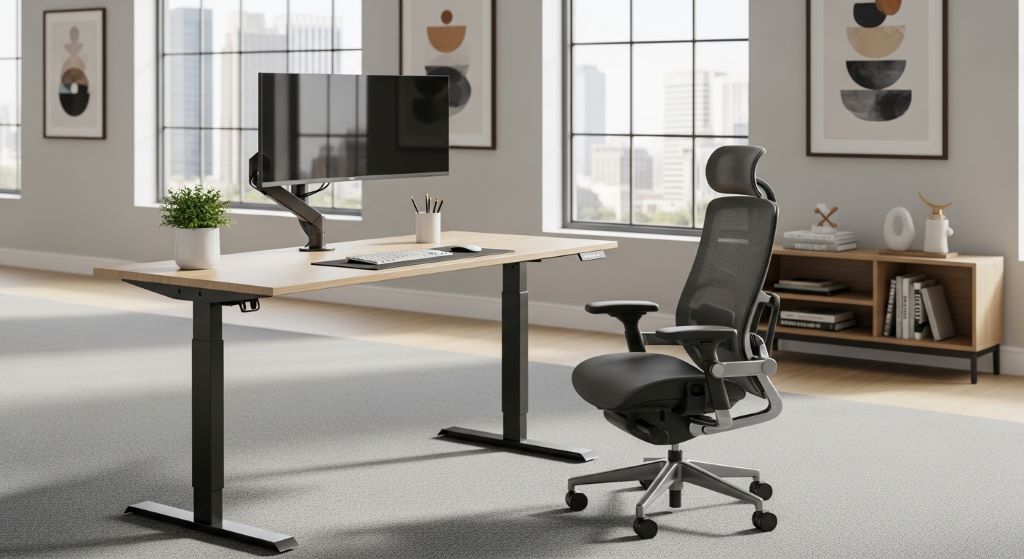
Height-adjustable desks have gained popularity for good reason. They allow people to alternate between sitting and standing, which improves circulation, reduces fatigue, and often enhances focus. Moreover, they accommodate people of different heights without requiring separate furniture.
L-shaped desks provide expanded work surface while maintaining a compact footprint. They’re particularly valuable for roles requiring multiple monitors or frequent reference to physical documents alongside computer work.
Benching systems create long, shared work surfaces that maximize space efficiency. These work well for teams that collaborate frequently and don’t need extensive personal storage. However, they require careful planning around privacy and noise management.
Mobile desks on casters offer ultimate flexibility. They can be easily reconfigured for different projects or moved to create open space for team gatherings. This adaptability supports dynamic work environments where needs change frequently.
Consider cable management when selecting any desk. Tangled wires create visual clutter and practical headaches. Built-in cable trays and grommets keep technology accessible while maintaining a clean appearance.
Investing in Quality Seating
Chairs directly impact employee health and comfort, making them one of the most important furniture investments you’ll make. Cheap seating creates expensive problems through reduced productivity and potential health issues.
Ergonomic task chairs with adjustable features support proper posture during extended sitting. Look for chairs offering seat height adjustment, lumbar support, armrest customization, and seat depth modification. These features ensure each person can create a setup that fits their body.
Conference room chairs should balance comfort with a professional appearance. They need to support people during meetings that might last several hours but shouldn’t be so comfortable that they encourage drowsiness during important discussions.
Lounge seating for informal areas should invite relaxation without promoting complete disengagement. The goal is creating spaces where people can step away from their desks while remaining mentally present and available for spontaneous collaboration.
Guest chairs in reception areas and private offices make first impressions and signal your company’s attention to detail. They should be comfortable for short periods while complementing your overall aesthetic.
Maximizing Storage Solutions
Clutter undermines productivity by creating visual stress and wasting time searching for needed items. Strategic storage furniture keeps workspaces organized and functional.
Personal storage like filing cabinets or desk pedestals gives employees secure places for their belongings. This is particularly important in open offices where desk space might be shared or rotated. Everyone needs a designated spot for their personal items and work materials.
Shared storage systems including bookcases and credenzas provide common access to frequently used resources. Placing these strategically throughout the office reduces the need for duplicate items and creates natural gathering points.
Mobile storage units on wheels offer flexibility for changing needs. They can move between workstations as projects shift or be wheeled into meeting rooms when specific materials are required.
Vertical storage maximizes space in smaller offices. Tall cabinets and wall-mounted shelving utilize otherwise wasted height, keeping floors clear and making rooms feel more spacious.
Consider security requirements when planning storage. Confidential documents, valuable equipment, and personal belongings need appropriate protection through lockable furniture.
Incorporating Technology Seamlessly
Modern office furniture must accommodate the technology that drives business efficiency. Failing to plan for these needs creates makeshift solutions that look unprofessional and hamper productivity.
Built-in power and data ports eliminate the need for extension cords snaking across floors. Conference tables with integrated connectivity let teams plug in instantly without fumbling under furniture or dealing with incompatible adapters.
Monitor arms free up desk space while allowing precise screen positioning. They’re especially valuable in offices with height-adjustable desks, ensuring monitors move with the work surface for consistent ergonomics.
Cable management systems built into furniture keep wires organized and accessible. This simplifies moves, changes, and troubleshooting while maintaining a clean aesthetic that reduces visual stress.
Charging stations integrated into lounge furniture and collaborative spaces ensure devices stay powered throughout the day. This small detail prevents the productivity drain of hunting for outlets or working with dying batteries.
Choosing Furniture That Grows With Your Business
Smart furniture investments consider not just current needs but future growth and changes. Flexibility and durability should influence every decision.
Modular systems allow you to add components as your team expands. Starting with core pieces and building out over time spreads costs while ensuring consistency in appearance and quality.
Durable construction justifies higher upfront costs through extended lifespan. Quality materials and solid craftsmanship mean furniture maintains its appearance and functionality for years, avoiding the expense and disruption of frequent replacements.
Timeless design choices resist becoming dated quickly. While trendy pieces might seem appealing initially, classic designs maintain their relevance and professionalism longer. This doesn’t mean boring; it means avoiding overly specific aesthetic choices that might feel stale in a few years.
Reconfigurable pieces adapt to changing needs without requiring complete replacement. Tables that adjust in size, partitions that move easily, and seating that serves multiple purposes all contribute to a dynamic office that evolves with your organization.
Balancing Aesthetics and Function
An office should look good and work well. These goals aren’t mutually exclusive, but they require deliberate planning to achieve simultaneously.
Cohesive design creates a professional impression that reflects positively on your brand. This doesn’t mean everything must match perfectly, but furniture should share common design language through color palette, materials, or style elements.
Natural materials like wood and leather add warmth to office environments. They create a more inviting atmosphere than purely synthetic materials while often improving acoustics through their sound-absorbing properties.
Color psychology influences mood and energy levels. Blues and greens tend to calm and focus attention. Warm tones like orange and yellow can energize creative spaces. Neutral bases with accent colors offer flexibility to adjust the feel of different zones.
Lighting integration through furniture design ensures adequate illumination for various tasks. Desk lamps, under-cabinet lighting, and backlit panels can all be incorporated into furniture planning rather than added as afterthoughts.
Planning for Health and Wellness
Employee wellbeing directly correlates with productivity. Furniture choices that support physical and mental health pay dividends through reduced absenteeism and increased engagement.
Active seating options like balance balls or kneeling chairs offer alternatives to traditional desk chairs. While not suitable for everyone or all-day use, they provide variety that keeps bodies engaged and can improve core strength.
Breakroom furniture that encourages genuine breaks helps prevent burnout. Comfortable seating removed from work areas gives people space to truly disconnect for a few minutes, returning to their tasks refreshed.
Biophilic design elements integrated into furniture bring nature indoors. Planters built into room dividers, natural wood finishes, and organic shapes all contribute to reduced stress and improved mood.
Adjustability throughout the office acknowledges that one configuration doesn’t work for everyone. Providing options and empowering employees to customize their environments shows respect for individual needs and preferences.
Implementing Changes Strategically
Transforming your office doesn’t require replacing everything at once. Strategic phased approaches often work better both financially and operationally.
Start with high-impact areas that affect the most people. Upgrading task seating or primary work surfaces typically delivers noticeable improvements that build support for additional changes.
Gather employee feedback before and after updates. Understanding pain points helps prioritize investments, while measuring satisfaction demonstrates the value of improvements and guides future decisions.
Consider pilot programs for significant changes. Testing new furniture types or configurations in limited areas lets you evaluate effectiveness before committing to larger purchases. This reduces risk and allows for refinements.
Plan for transition periods when introducing major changes. People need time to adjust to new furniture and work arrangements. Providing guidance and remaining flexible during implementation increases adoption and satisfaction.
Conclusion
Designing a productive office through smart furniture choices requires understanding how physical environments influence work. By creating distinct zones for different activities, investing in quality seating and adjustable desks, and incorporating technology seamlessly, you build a space that supports your team’s success.
Remember that effective workspace design balances aesthetics with function, accommodates current needs while allowing for growth, and prioritizes employee wellbeing. Strategic office upgrades delivered through thoughtful furniture selection directly impact business efficiency and create environments where people do their best work.
The furniture you choose communicates your values and either enables or hinders productivity. Taking time to make informed decisions about these foundational elements transforms your office from a place people must be into a space that actively contributes to their success and satisfaction.
Frequently Asked Questions
How much should a business budget for quality office furniture?
Budget approximately fifteen hundred to three thousand dollars per employee for comprehensive office furniture including desks, chairs, and storage. However, this varies significantly based on furniture quality, office size, and specific needs. Prioritize spending on items employees use most frequently, particularly task chairs and primary work surfaces. Consider phased implementation if budget constraints prevent furnishing the entire office at once.
What furniture changes provide the quickest productivity improvements?
Upgrading task seating typically delivers the fastest noticeable improvement in comfort and focus. Additionally, adding height-adjustable desks or desk converters allows employees to change positions throughout the day, reducing fatigue. Creating dedicated quiet zones with proper acoustic treatment helps employees concentrate on demanding tasks. These changes directly address common productivity barriers and often generate immediate positive feedback.
How can small businesses create productive offices with limited budgets?
Focus on essential quality pieces rather than furnishing every area immediately. Invest in good chairs first, as they most directly impact daily comfort and health. Consider purchasing gently used furniture from reputable dealers for significant savings. Mix higher-end pieces in critical areas with budget-friendly options in less frequently used spaces. Prioritize flexibility through modular and multipurpose furniture that adapts as your business grows.
Should companies let employees choose their own office furniture?
Providing choice within curated options typically works best. Offer several pre-approved chair models or desk styles that meet ergonomic and aesthetic standards, then let employees select their preference. This balances individual comfort needs with maintaining cohesive design and controlling costs. Complete free choice can lead to procurement challenges and visual inconsistency, while no choice may leave some employees with unsuitable furniture.
How often should office furniture be replaced?
Quality office furniture typically lasts seven to fifteen years depending on usage intensity and maintenance. Replace chairs when adjustment mechanisms fail or cushioning deteriorates significantly, usually after five to ten years. Desks and storage furniture often last longer unless damaged or when relocating to spaces requiring different configurations. Regular maintenance extends furniture life significantly. Evaluate furniture condition annually rather than following arbitrary replacement schedules.
Related Topics:
10 Communication Tips That Instantly Improve Any Relationship
Minimalist Lifestyle Tips to Simplify Your Life and Reduce Stress