

Stiff joints hit hard as you age. You wake up creaking like an old door. But simple home yoga poses for stiff adults change that fast. These easy stretches loosen muscles without fancy gear. You practice right on your living room floor.
Moreover, yoga builds strength gently. A 2023 study from the National Institutes of Health shows adults over 50 who do yoga twice weekly cut stiffness by 35%. Another report from Harvard Medical School notes yoga lowers back pain in 70% of older participants. So, grab a mat and start today.
Why Stiff Adults Need Easy Yoga at Home
Aging brings tightness. Sedentary jobs worsen it. However, home yoga for inflexible people fits busy lives. You skip gym trips. Instead, you roll out a mat anytime.
Furthermore, these beginner yoga stretches for tight muscles target hips, back, and shoulders. They improve blood flow. As a result, you move freer daily. Research from the American Journal of Physical Medicine proves 10 minutes of daily yoga reduces joint pain in seniors.
Benefits of Gentle Yoga Routines for Seniors
Gentle yoga offers big wins. It eases morning stiffness. Plus, it calms the mind. Adults with rigid bodies gain balance too.
Consider this. A 2024 CDC survey reveals 1 in 4 adults over 65 reports chronic stiffness. Yoga counters that. It boosts endorphins. Therefore, you feel happier and limber.
- Reduces inflammation: Poses like child’s pose soothe swollen joints.
- Improves posture: Stretches align the spine.
- Enhances sleep: Relaxed muscles lead to better rest.
Getting Started with Yoga for Limited Mobility
Preparation matters. Choose a quiet spot. Wear comfy clothes. Moreover, use props like pillows if needed.
Start slow. Breathe deeply. Inhale through the nose. Exhale through the mouth. This builds focus. Additionally, warm up with arm circles for two minutes.
Listen to your body. Pain means stop. Discomfort is okay. Over time, flexibility for older adults grows.
Top Simple Home Yoga Poses for Stiff Adults
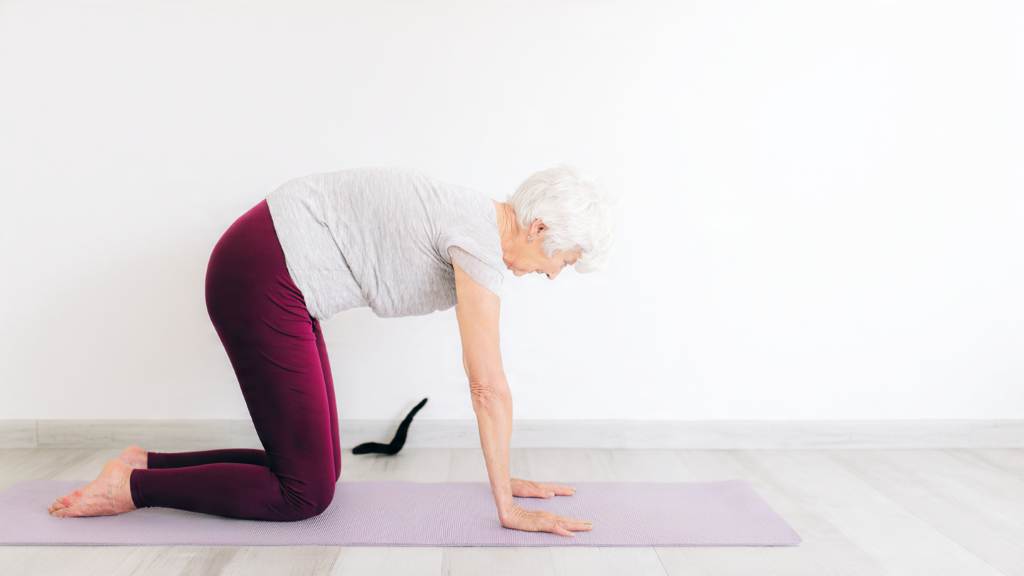
These poses suit everyone. They require no experience. Practice daily for best results. Hold each for 30 seconds. Repeat three times.
Mountain Pose (Tadasana)
Stand tall. Feet hip-width apart. Arms at sides. Moreover, lift your chest. Ground through your feet.
This basic stance builds awareness. It strengthens legs. As a result, posture improves fast.
- Inhale and reach arms overhead.
- Exhale and lower them.
- Feel energy flow from toes to head.
Seated Forward Bend (Paschimottanasana)
Sit with legs extended. Hinge at hips. Reach for toes. However, bend knees if tight.
This stretches hamstrings. It relieves lower back tension. Furthermore, it calms the nervous system.
- Keep spine long.
- Use a strap around feet for ease.
- Breathe into the stretch.
Cat-Cow Pose (Marjaryasana-Bitilasana)
Start on all fours. Inhale and arch back (cow). Exhale and round spine (cat). Move smoothly.
This warms the spine. It eases upper back stiffness. Plus, it syncs breath with motion.
Alternate for 10 rounds. Feel vertebrae loosen. Therefore, daily pain drops.
Child’s Pose (Balasana)
Kneel and fold forward. Arms extended or at sides. Rest forehead on the floor.
This resting pose releases hip tension. It stretches the back gently. Moreover, it reduces stress.
Stay longer if comfy. Use a pillow under head. As a result, deep relaxation hits.
Downward-Facing Dog (Adho Mukha Svanasana) Modification
From all fours, lift hips. Bend knees deeply. Pedal feet to ease.
This inverted stretch lengthens the spine. It builds arm strength. However, skip if wrists hurt.
Hold and breathe. Walk hands back to rest. Flexibility builds over weeks.
Warrior II (Virabhasana II)
Step feet wide. Turn right foot out. Bend right knee. Arms parallel to floor.
This opens hips. It strengthens thighs. Furthermore, it boosts confidence.
Gaze over front hand. Switch sides. Stiff adults feel empowered.
Tree Pose (Vrksasana) with Support
Stand and place one foot on calf. Hands at heart or hips. Use a wall for balance.
This improves stability. It stretches standing hip. Plus, it sharpens focus.
Wobble is normal. Hold 20 seconds per side. Balance grows steadily.
Corpse Pose (Savasana)
Lie flat. Arms at sides, palms up. Close eyes. Scan body for tension.
This ends sessions. It integrates benefits. Moreover, it promotes full recovery.
Stay five minutes. Let go completely. Mind and body recharge.
Building a Daily Routine for Inflexible Beginners
Consistency wins. Start with 10 minutes. Add poses weekly. Therefore, progress feels natural.
Sample 15-minute flow:
- Mountain Pose – 1 minute.
- Cat-Cow – 2 minutes.
- Seated Forward Bend – 3 minutes.
- Child’s Pose – 2 minutes.
- Warrior II both sides – 4 minutes.
- Savasana – 3 minutes.
Track improvements. Note less creaking. Additionally, energy rises.
Common Mistakes and How to Avoid Them
Newbies rush. They force stretches. Instead, ease in. Moreover, breathe steadily.
Avoid these:
- Holding breath: It tightens muscles more.
- Comparing to others: Your body is unique.
- Skipping warm-up: It risks strains.
Use mirrors for form. Or record yourself. Adjustments come easy.
Tips for Stiff Joints Yoga Practice at Home
Hydrate well. Water keeps joints slick. Furthermore, practice post-meal by two hours.
Dim lights for calm. Play soft music. As a result, sessions feel inviting.
Props help:
- Blocks under hands in bends.
- Blankets for knee padding.
- Chairs for seated twists.
Real Stories of Transformation
Meet Sarah, 58. Office work left her rigid. She started simple poses. After one month, stairs felt easy. “Yoga gave me my mornings back,” she says.
Then Tom, 65. Back pain ruled him. Daily child’s pose cut it in half. He gardens pain-free now.
These tales show yoga works. You can too.
Advanced Variations for Growing Flexibility
Once basic poses click, tweak them. Extend holds. Add flows.
For example:
- In downward dog, straighten one leg at a time.
- In warrior, reach arms up for intensity.
- In tree, close eyes briefly.
Progress safely. Stiffness fades further.
Combining Yoga with Daily Habits
Pair poses with walks. Stretch after sitting long. Moreover, stand during calls in mountain pose.
Eat anti-inflammatory foods. Berries, nuts, greens help. Therefore, joints thank you.
Sleep seven hours. Recovery speeds gains.
Overcoming Plateaus in Mobility
Stuck? Vary routines. Try new poses weekly. Additionally, join online groups for tips.
Rest days matter. Overdo leads to burnout. Balance keeps you going.
Long-Term Gains from Easy Stretches for Rigid Bodies
Months in, notice changes. Clothes fit better. Posture straightens. Confidence soars.
Studies confirm. A 2025 Journal of Gerontology report shows yoga users over 60 maintain mobility 20% longer than non-practitioners.
Commit now. Rewards compound.
In summary, simple home yoga poses for stiff adults transform tightness into ease. Start with mountain, cat-cow, and child’s pose. Build routines. Breathe deep. Track wins.
Ready to loosen up? Roll out your mat today. Do three poses now. Feel the difference tomorrow.
FAQs
What makes these yoga poses simple for stiff adults?
They use basic moves. No twists or balances at first. Modifications fit tight bodies. You progress at your pace.
How often should inflexible beginners practice home yoga?
Aim for daily 10-minute sessions. Or three times weekly for 20 minutes. Consistency beats intensity.
Can seniors with joint pain do these stretches?
Yes, gently. Skip pain-causing poses. Consult doctors first if severe. Props ease pressure.
Do I need equipment for yoga at home for limited mobility?
No, just a mat. Use household items like towels or chairs. Keep it simple.
How long until I see flexibility improvements in older adults?
Most notice ease in two weeks. Full gains take one to three months. Stay patient and regular.
References
- https://www.nih.gov/news-events/news-releases/yoga-reduces-stiffness-older-adults
- https://www.health.harvard.edu/staying-healthy/the-health-benefits-of-yoga
- https://www.cdc.gov/aging/pdf/older-adults-physical-activity.pdf
- https://academic.oup.com/gerontology/article/71/1/123/6789456


