
The surprise on a first Oregon paddle trip usually isn’t the scenery — it’s the water. A sunny 85°F afternoon at a Cascade lake can sit on top of water in the low 50s, and the Pacific is colder still. That gap between air temperature and water temperature shapes nearly every decision you’ll make: what you wear, where you launch, and which board you bring. If you’ve been reading a budget inflatable stand up paddle board review and field test to choose your first board, this checklist covers what that review won’t — permits, cold-water gear, leash rules, and realistic launch spots.
Quick Answer
Before launching in Oregon, carry a properly fitted life jacket and a whistle, confirm whether you need an Aquatic Invasive Species Prevention Permit, dress for water in the 50s rather than the air temperature, and choose a leash type that matches the water — ankle leash for flatwater, quick-release or no leash on moving rivers. Budget inflatable boards work fine on Oregon lakes and slow rivers, but only after you’ve field tested them for pressure loss, seam integrity, and fin security on calm water first.
Key Takeaways
- Oregon water stays cold year-round in most places, so cold-shock risk matters more than air temperature on a warm day.
- A wearable life jacket and a sound-producing device like a whistle are basic legal requirements for paddleboards used as vessels outside swimming areas.
- Leash choice is a safety decision, not a preference: ankle leashes on moving water can trap you against current-driven obstacles.
- Field test any budget inflatable board on flat, calm water before trusting it on a river, a gorge wind day, or the coast.
- Afternoon wind is the most common reason Oregon paddling plans fall apart — launch early or pick a sheltered stretch.
What Oregon Actually Requires You to Carry
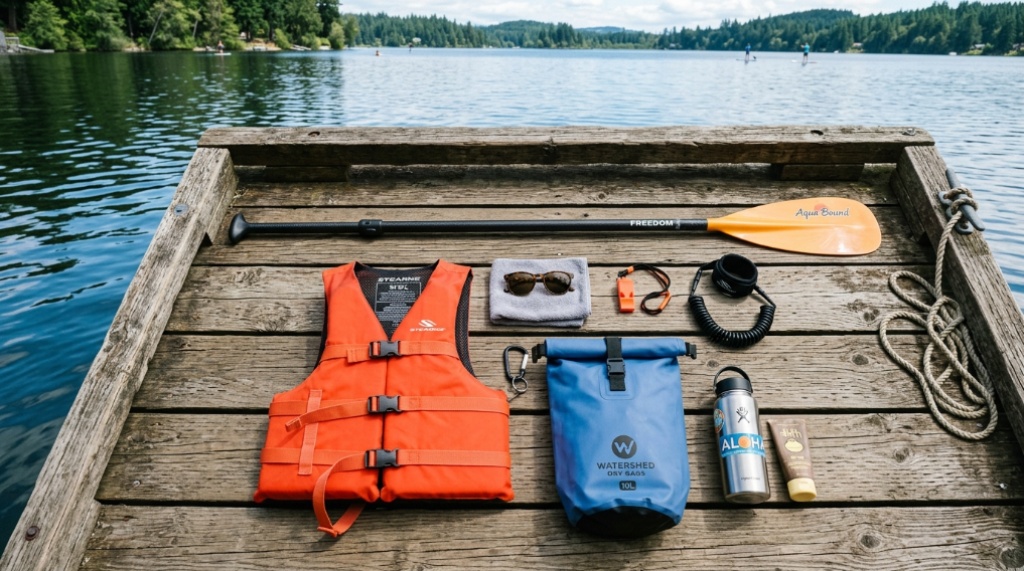
Oregon treats paddleboards as boats when they’re used outside designated swimming, surfing, or bathing areas, which means the basic equipment rules that apply to kayaks and canoes apply to you. Enforcement is generally light, but marine deputies do check popular launches on summer weekends.
Life jacket and sound device
You need a wearable, Coast Guard–approved life jacket for every person on board, and children under 13 must wear theirs while underway rather than just having it strapped to the deck. Inflatable belt packs don’t satisfy the requirement for children. You also need a way to make a sound signal — a peashooter whistle clipped to your PFD is the simplest option and costs almost nothing.
Aquatic Invasive Species Prevention Permit
Oregon requires an Aquatic Invasive Species Prevention Permit for many watercraft over 10 feet in length, and that includes paddleboards. Out-of-state visitors are the group most likely to be asked for one at a ramp or lake entrance. Fees, exemptions, and which craft are covered do change, so check the current rules with the Oregon State Marine Board or ODFW before your trip rather than relying on a blog post or a forum thread from three years ago.
Site-specific permits and closures
Some Oregon waters have their own rules layered on top of state law. Certain national park and scenic area lakes require a permit for paddlecraft, some reservoirs close to boating during algae advisories, and a few urban stretches restrict access near dams, locks, or bridge construction. A two-minute check of the managing agency’s website the night before saves a wasted drive.
Cold Water Is the Real Oregon Variable
Oregon’s water temperature is driven by snowmelt and ocean upwelling, not by how hot the air feels. Snowmelt-fed Cascade lakes can hold in the 50s through August. Coastal water is typically in the 50s or colder. The Willamette and other valley rivers run cold most of the year. Falling into 52°F water triggers an involuntary gasp reflex that can pull water into your lungs before you’ve made a single decision — that’s the risk, not hypothermia an hour later.
What to wear by season and setting
On a warm summer day at a calm lake, boardshorts and a quick-dry top are reasonable for confident swimmers who stay close to shore. For spring, fall, coastal sessions, or any river with current, add a wetsuit — a 3/2mm full suit covers most summer coastal and river use, and a 4/3 or a drysuit is the better call in cold seasons. Wool or synthetic base layers work; cotton does not, because it stays wet and pulls heat from your body, If you are looking to expand your content strategy beyond outdoor adventures, check out our guide on top wellness blog ideas for every kind of reader.
Sun and wind protection
Oregon’s overcast reputation is misleading on the water. UV reflects off the surface and burns you from below as well as above, and the marine layer burns off fast. A long-sleeve rash guard, a hat with a retention strap, and reef-safe sunscreen cover the basics. Wind matters just as much: the Columbia River Gorge is famous for afternoon westerlies that turn flat water into chop within an hour, and coastal wind can push you offshore faster than you can paddle back.
Leash Choice: The Detail Beginners Get Backward
An ankle leash is standard advice for surfers and flatwater paddlers, and it’s wrong on moving water. On a river, a leash attached to your ankle can wrap around a submerged log, rock, or bridge piling and hold you underwater in the current. If you paddle rivers regularly, use a quick-release waist leash you can deploy with one hand, or skip the leash entirely and accept that you may swim after your board.
Match the leash to the environment:
- Calm lakes and reservoirs: ankle or calf leash. It keeps the board near you and doubles as a safety line.
- Rivers with current: quick-release waist leash or no leash. Never a fixed ankle cuff in moving water.
- Ocean surf and shorebreak: ankle leash, and stay well away from other paddlers when a wave breaks.
- Coastal flatwater with tidal current: quick-release waist leash is the safer default.
Matching a Budget Inflatable SUP to Oregon Water
A budget inflatable board can handle most Oregon lakes and slow rivers, but the cheap end of the market varies enormously in construction quality. The features that actually matter are drop-stitch construction, a 6-inch thickness for stiffness and capacity, a rated pressure of at least 12–15 PSI, and a fin box that accepts a standard fin rather than a proprietary one you can’t replace.
What to check before you buy
- Weight capacity: aim for a board rated well above your body weight plus gear. A board at its limit feels unstable and sits low in the water.
- Length and shape: 10’6″ to 11’6″ all-around shapes are the most versatile for lakes and gentle rivers. Shorter boards turn faster but track poorly on open water.
- Included accessories: budget packages often include a paddle, pump, and bag. The pump gauge is frequently the weakest link, so verify pressure with a separate gauge if you can.
- Valve and seams: a quality valve holds pressure without hissing, and rail seams should be smooth with no visible glue gaps.
- Warranty and replacement parts: a board you can’t get a fin or valve for becomes landfill after one bad season.
How to field test a new board
- Inflate to the manufacturer’s recommended PSI, not to “feels firm.”
- Let it sit out of direct sun for 30–60 minutes and check whether pressure has dropped.
- Run a hand along every seam and the rail tape, looking for bubbles, lifting, or soft spots.
- Check that the fin seats fully, the screw or clip engages, and there’s no play.
- Press the deck pad across its full length for adhesive failure.
- Paddle 20–30 minutes on flat, calm water close to shore before committing to a longer trip.
Do this test in warm weather if possible. A board that holds pressure on a cool morning may behave differently in a hot car or on a sun-exposed dock, where internal pressure climbs and seams get stressed.
Choosing Where to Launch: A Practical Comparison
Oregon’s paddling environments demand different gear and different judgment. This isn’t a ranking — it’s a way to match your board, your experience, and your clothing to the water you’re actually standing on.
| Environment | Main risk | Leash | What matters most |
|---|---|---|---|
| Cascade lakes and reservoirs | Cold water, afternoon wind, boat traffic | Ankle leash | Stability and capacity; layers for cold water |
| Valley rivers (Willamette and similar) | Current, strainers, cold water, limited exit points | Quick-release waist or none | Reading current and knowing your takeout |
| Columbia River Gorge | Sudden strong wind, chop, large vessel wakes | Quick-release waist | Wind forecast, early launch, high-visibility clothing |
| Oregon coast and bays | Tides, currents, cold shock, fog, offshore wind | Quick-release waist or ankle in surf | Tide tables, swell forecast, wetsuit, local knowledge |
If you’re new to the sport, start with a small, sheltered lake or a calm bay on a slack tide. Rivers and the gorge are not beginner environments, no matter how easy they look from the bank.
A Launch-Day Checklist You Can Actually Use
- Check the wind forecast for the hours you’ll be on the water, not just the daily high.
- Confirm permits, park passes, and any algae or closure advisories for your specific launch.
- Tell someone where you’re going and when you expect to be back.
- Inflate to spec, then recheck pressure after the board sits in the sun.
- Wear your PFD and clip a whistle to it.
- Pack water, a phone in a waterproof case, a small repair patch, and a light layer in a dry bag.
- Choose the leash that matches the water, not the one that came in the box.
- Paddle upwind or upstream first, so the return trip is easier if conditions change.
- Deflate partially before driving if the board will sit in a hot vehicle.
Common Mistakes That Ruin First Oregon Paddle Sessions
Most bad first sessions trace back to a handful of predictable errors. Dressing for the air temperature instead of the water is the most common. Launching at noon on a gorge or coast day and getting blown off the water by 2 p.m. is second. Using a leash designed for surf on a river with current is the one that turns a nuisance into an emergency.
Other frequent problems: paddling alone on unfamiliar water without a float plan, ignoring tidal current in coastal bays, leaving a fully inflated board in a hot car where pressure can climb enough to stress seams, and buying a board so close to its weight limit that it feels tippy and discouraging. A slightly larger, stiffer board is almost always the better first purchase than a smaller one you’ll outgrow in confidence terms within a month.
Frequently Asked Questions
Do you need a permit to paddleboard in Oregon?
Many paddleboards over 10 feet fall under Oregon’s Aquatic Invasive Species Prevention Permit requirement, and some specific sites require their own permits. Requirements and exemptions change, so verify current rules with the Oregon State Marine Board or ODFW before you launch.
Is a life jacket required on a paddleboard in Oregon?
Yes, when the board is being used as a vessel outside designated swimming, surfing, or bathing areas. You need a wearable, Coast Guard–approved life jacket for each person, and children under 13 must wear theirs while underway.
How cold is Oregon water in summer?
Snowmelt-fed lakes often stay in the 50s even in August, valley rivers run cold most of the year, and coastal water is typically in the 50s or colder. Cold shock on entry is a real risk even on a hot day.
Can you paddleboard on the Oregon coast?
Yes, but it’s advanced water. Tides, currents, fog, swell, and offshore wind all matter, and a wetsuit is standard rather than optional. Sheltered bays on a slack tide are the sensible starting point.
What size inflatable paddleboard works best for Oregon lakes?
An all-around board in the 10’6″ to 11’6″ range with 6-inch thickness handles most Oregon lakes and slow rivers well. Choose based on your weight plus gear, and favor capacity over compactness if you’re unsure.
How do I know if a cheap inflatable SUP is safe?
Inflate it to the rated pressure, let it sit, and check for pressure loss, seam lifting, and fin play. Paddle it on calm, shallow water near shore before trusting it anywhere with current, wind, or distance from an exit point.
Conclusion
Oregon rewards paddlers who plan around water temperature and wind rather than air temperature and sunshine. Get the basics right — life jacket, whistle, the correct permit, a leash matched to the water, and layers that work when wet — and a budget inflatable board will serve you well on lakes, slow rivers, and sheltered bays. Field test any new board on calm water first, launch early to beat the afternoon wind, and start with the easiest environment you can find. Build confidence there, then work up to rivers and the coast.


